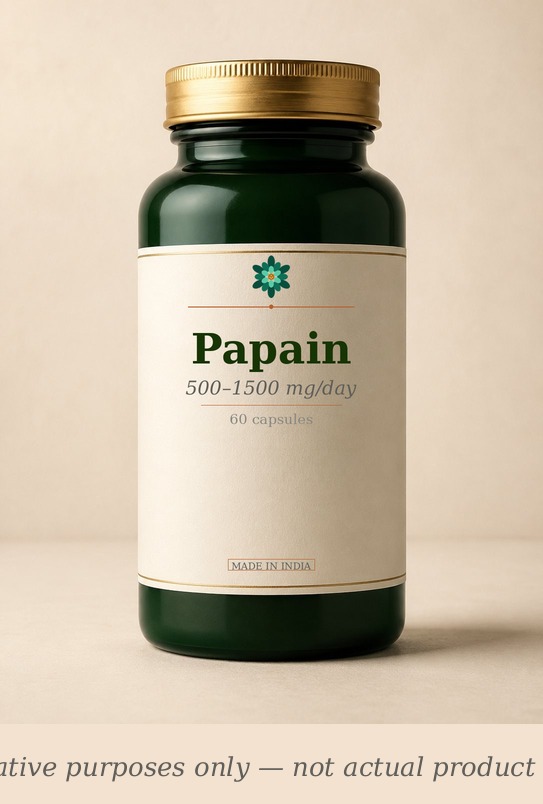
SacredBod's longer take on Papain — context the structured blocks above don't capture.
Papain is one of the most widely used proteolytic enzymes in both food and medicine. Extracted from the latex of unripe papaya fruit, this cysteine protease has been used for centuries as a meat tenderizer, digestive aid, and wound debriding agent. In modern supplement markets, it appears both as a standalone digestive enzyme and as part of multi-enzyme formulations marketed for anti-inflammatory and anti-edema purposes. The leap from digestive aid to systemic anti-inflammatory is theoretically plausible but clinically under-supported.
The mechanism for digestive use is straightforward: papain breaks down proteins into smaller peptides and amino acids in the acidic environment of the stomach, assisting digestion and reducing bloating after protein-rich meals. The systemic anti-inflammatory claim is more contested. Proponents argue that when taken on an empty stomach, proteolytic enzymes can be absorbed into the bloodstream and break down circulating immune complexes and fibrin deposits, thereby modulating inflammation. Critics note that the absorption of intact enzymes across the intestinal mucosa is minimal and that the clinical evidence for this mechanism in humans is weak.
The clinical evidence for papain in osteoarthritis is very limited. A 2004 pooled reanalysis in Clinical Drug Investigation evaluated a multi-enzyme combination containing bromelain, trypsin, and rutin — not papain alone — and found it comparable to diclofenac for pain and function with fewer adverse events. A 2016 systematic review in the Journal of Clinical Rheumatology concluded that oral enzyme therapy showed modest benefits for OA, but evidence quality was low and sample sizes were small. There are no published randomized trials specifically evaluating papain as a standalone treatment for osteoarthritis.
For digestive support, papain is well-established and safe at standard doses. For joint health, it is best viewed as a speculative adjunct within multi-enzyme formulations, not a primary therapeutic agent. The traditional use is strong; the modern clinical validation is weak.
Safety is generally favorable for digestive use. Gastrointestinal upset is the most common adverse effect. The theoretical bleeding risk with high-dose proteolytic enzymes is rarely clinically significant but warrants caution with anticoagulants. Papaya and latex allergies are contraindications. Pregnancy and breastfeeding are not recommended.
For consumers, papain is a useful digestive enzyme with a long history of safe use. For joint inflammation, the honest assessment is: traditional use is extensive, preclinical mechanisms are plausible, but human clinical trials are essentially absent. Multi-enzyme combinations offer slightly more evidence but remain in the preliminary category.