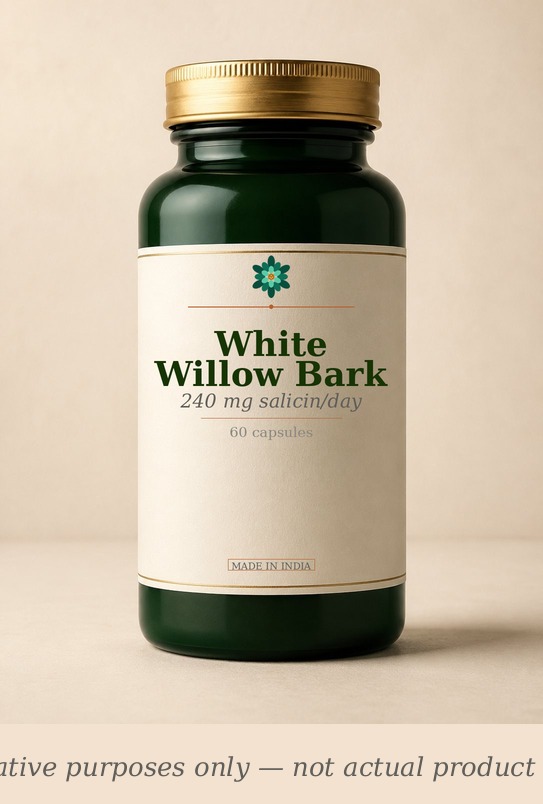
SacredBod's longer take on White Willow Bark — context the structured blocks above don't capture.
White willow bark is the original source of aspirin — a connection that is both its greatest strength and its most significant limitation. The bark of Salix alba contains salicin, a phenolic glycoside that gut bacteria and liver enzymes convert into salicylic acid, the same compound that synthetic aspirin delivers. However, the natural matrix of willow bark produces a slower, gentler, and less potent effect than popping an aspirin tablet. For some consumers, this gentleness is a feature; for others seeking rapid, powerful pain relief, it is a bug.
The clinical evidence is supportive but modest. A 2007 randomized trial in Phytomedicine evaluated a standardized willow bark extract providing 240 mg of salicin daily in patients with hip and knee osteoarthritis. Over six weeks, the treatment group showed significant reductions in WOMAC pain scores compared to placebo, with good tolerability and no serious adverse events. A 2001 study in the American Journal of Medicine found similar benefits over a shorter two-week period. A 2008 systematic review in Phytotherapy Research concluded that willow bark extract had moderate evidence for reducing low back pain, though effect sizes were smaller than synthetic NSAIDs.
The pharmacological profile is distinct from aspirin in ways that matter clinically. Willow bark contains not just salicin but a spectrum of flavonoids and polyphenols that may contribute to anti-inflammatory and antioxidant activity beyond the salicylate mechanism alone. The conversion of salicin to salicylic acid is slower and more variable than direct aspirin absorption, producing lower peak salicylate levels and a longer duration of mild activity. This explains the better gastrointestinal tolerability: willow bark causes fewer stomach ulcers and bleeding episodes than aspirin at equivalent analgesic doses.
However, the slower onset and lower potency mean that willow bark is not appropriate for severe pain, acute inflammatory flares, or conditions requiring rapid relief. It is best suited for chronic, mild-to-moderate osteoarthritis or low back pain where the goal is steady, gentle management rather than dramatic intervention.
Safety considerations mirror those of aspirin, though generally milder. Salicylate allergy is an absolute contraindication. Children should not use willow bark due to Reye’s syndrome risk. Pregnancy and breastfeeding are contraindicated. The anticoagulant interaction is real — willow bark should not be combined with warfarin, aspirin, or other blood thinners without medical supervision. People with bleeding disorders or upcoming surgery should avoid it.
For consumers with mild-to-moderate joint or back pain who prefer natural approaches and have good gastrointestinal tolerance, white willow bark is a reasonable option with a modest but genuine evidence base. It should be viewed as a gentle herbal salicylate, not a natural equivalent to ibuprofen.