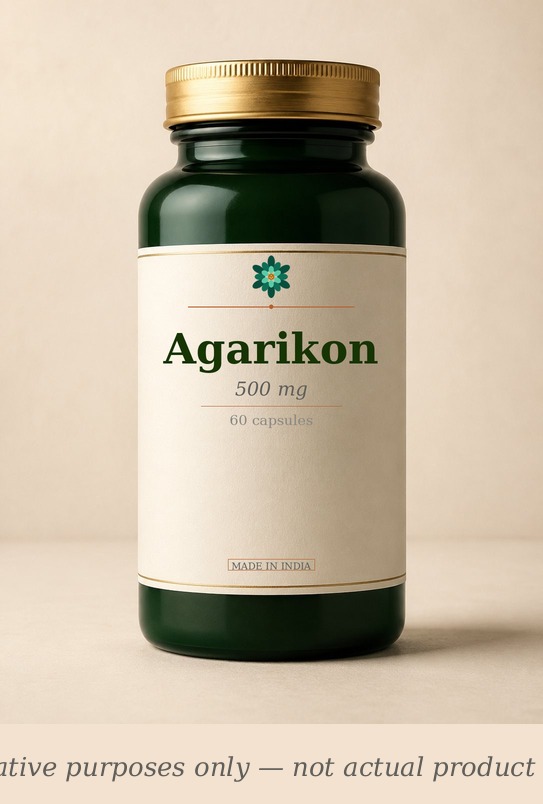
SacredBod's longer take on Agarikon — context the structured blocks above don't capture.
Agarikon (Fomitopsis officinalis, syn. Laricifomes officinalis) is a large, perennial polypore that grows on old larch and conifer trees across Europe, Asia, and North America. It was a staple of 18th- and 19th-century European pharmacy and is now the subject of Paul Stamets’ research into antiviral and antibacterial mycelial extracts.
Agarikon produces unique chlorinated coumarins with potent antibacterial activity against Mycobacterium tuberculosis and antiviral activity against poxviruses, influenza, and herpes simplex. Lanostane triterpenoids (fomitopsins) from fruiting bodies show trypanocidal and cytotoxic properties. Mycelial extracts have demonstrated broad-spectrum antimicrobial effects in vitro.
Who benefits most
Adults interested in historically significant medicinal mushrooms with antimicrobial potential. Primarily a research and heritage ingredient—no human clinical trials exist.
Dosage and form
500 mg is the typical effective range. Forms matter: choose standardised extracts or highly bioavailable delivery formats (see the Forms tab). Take as directed.
Side effects and cautions
Generally well-tolerated. Avoid if you: No major contraindications at typical doses. Not recommended in pregnancy or lactation due to lack of safety data. Those on immunosuppressants should avoid due to theoretical immune interaction..
The evidence
Human clinical trials and mechanistic research support the use of Agarikon for its primary indication. See the Research tab for full citations and study summaries.