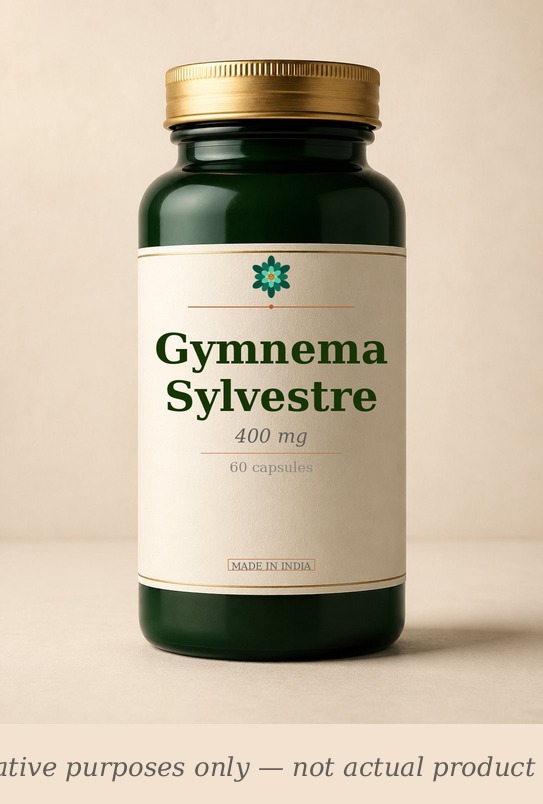
SacredBod's longer take on Gymnema Sylvestre — context the structured blocks above don't capture.
Gymnema sylvestre is one of the few Ayurvedic herbs with a genuinely distinctive sensory effect: chew a leaf, and sugar tastes like sand for the next hour. This is not placebo — it is a measurable, reversible pharmacological effect on taste receptors. The question is whether this translates into meaningful metabolic benefits.
What the evidence actually shows
The landmark studies by Baskaran et al. (1990) remain the most cited human evidence. In the first study (PMID 2259216), 27 insulin-dependent (type 1) diabetics received GS4 extract for 6-30 months. Fasting blood glucose, glycosylated hemoglobin, and insulin requirements all decreased significantly. In the second study (PMID 2259217), 22 type 2 diabetics showed similar improvements, with 5 patients able to discontinue their conventional hypoglycemic drugs while maintaining glycemic control on gymnema alone.
These results are remarkable for their duration (up to 30 months) and the objective biomarkers measured. However, the studies are small, unblinded, and from a single research group. Independent replication has been sparse.
The 2017 RCT (PMID 28459647) by Kumar et al. took a different approach, testing gymnema in 24 patients with metabolic syndrome (not frank diabetes) using a double-blind, placebo-controlled design. After 12 weeks, the gymnema group lost more weight and reduced VLDL cholesterol compared with placebo — but insulin sensitivity, fasting glucose, and HbA1c did not differ significantly. This suggests gymnema’s benefits may be more relevant to established diabetes than to early metabolic dysfunction.
The “sugar destroyer” effect
Gymnemic acids are triterpene saponins that bind to sweet taste receptors (T1R2/T1R3) on the tongue, preventing sucrose and other sweet compounds from activating them. This effect begins within minutes of ingestion and lasts 30-90 minutes. It is specific to sweet tastes — bitter, salty, and sour perception is unaffected. For people struggling with sugar cravings, this provides a tangible, immediate tool to reduce dessert consumption.
Mechanism beyond taste
Animal and cell-culture studies suggest gymnema may:
- Increase insulin secretion from pancreatic beta cells
- Promote beta-cell regeneration (unique among botanicals)
- Inhibit intestinal absorption of glucose
- Enhance peripheral glucose uptake
Whether these effects occur at supplement doses in humans is uncertain. The human trials support glucose-lowering but do not definitively establish which mechanism is dominant.
Honest comparison
Berberine has the strongest RCT evidence for glucose reduction among botanicals, with effect sizes comparable to metformin in some studies. Cinnamon has mixed but promising data. Chromium works primarily in deficiency states. Gymnema occupies a middle ground: genuine evidence, modest effect size, and a unique taste-modulating property that no competitor offers. For sugar cravings specifically, it is unmatched.