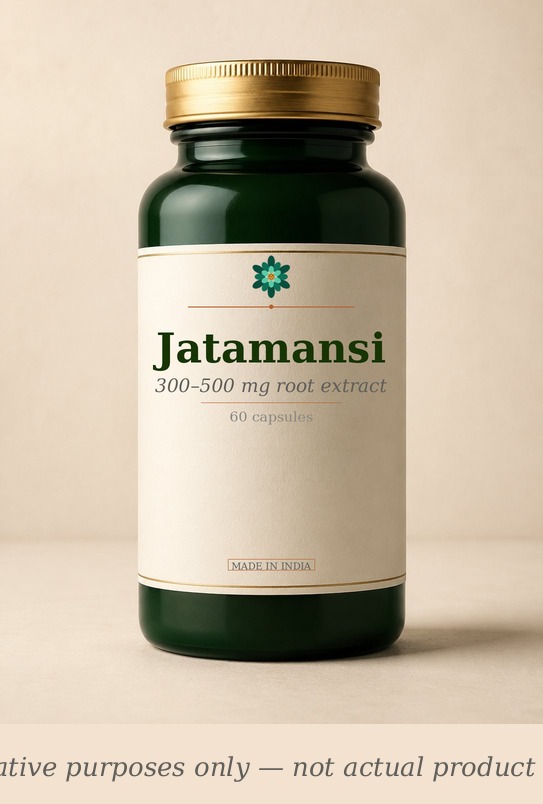
SacredBod's longer take on Jatamansi — context the structured blocks above don't capture.
Jatamansi occupies a storied place in Ayurvedic pharmacology as a Medhya Rasayana — a class of herbs traditionally believed to sharpen intellect, steady the mind, and promote restorative sleep. In modern supplement markets it is often marketed as a natural nootropic or sedative, sometimes under the label “Indian valerian.” The comparison is botanical shorthand, not taxonomic truth: Nardostachys jatamansi is a distinct species from European valerian, and its phytochemical profile differs accordingly.
The root’s bioactive matrix includes sesquiterpenes such as valeranone and nardostachone, alongside coumarins and lignans like cycloolivil. In preclinical models, these compounds have demonstrated antioxidant capacity and acetylcholinesterase inhibition — mechanisms that could theoretically support cognitive resilience and calm. A 2024 study isolated cycloolivil from jatamansi and showed it could suppress TNF-α/IFN-γ-driven chemokine production by blocking NF-κB and JAK/STAT pathways in keratinocytes, adding an anti-inflammatory dimension to the herb’s pharmacology. Earlier rodent work reported modulation of brain GABA and biogenic amine levels, which aligns with traditional calming indications.
Yet the gap between tradition and clinical confirmation remains wide. There are no published randomized, placebo-controlled trials in humans evaluating jatamansi for sleep quality, anxiety reduction, or cognitive enhancement. The existing evidence is entirely preclinical — cell-line and animal studies that suggest biological activity but cannot predict efficacy or dosing in people. This does not invalidate centuries of traditional use, but it does mean marketing claims should be framed accordingly.
Safety considerations are modest but real. Jatamansi has sedative properties in traditional practice, so stacking it with pharmaceutical hypnotics, benzodiazepines, or other strong CNS depressants is unwise without medical supervision. Pregnancy and breastfeeding are contraindicated due to a lack of safety data. A practical concern often overlooked is conservation status: Nardostachys jatamansi is listed under CITES Appendix II, meaning wild populations are regulated to prevent overharvesting. Consumers should prioritize products from cultivated sources or reputable Indian manufacturers with third-party testing for authenticity and heavy metals.
For those drawn to Ayurvedic brain and sleep support, jatamansi is a culturally significant option with plausible preclinical mechanisms. It is best viewed as a traditional tonic rather than a clinically proven therapeutic, used within its traditional dose range and sourced with sustainability in mind.