SacredBod
0
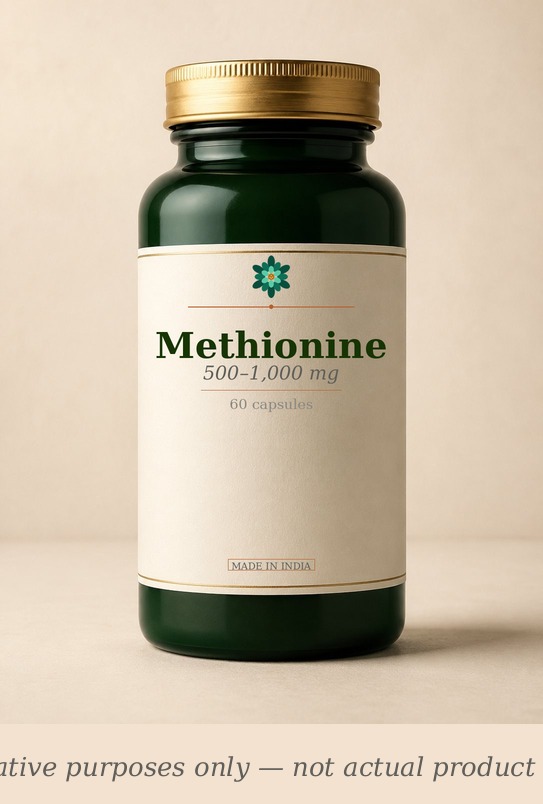
Methionine — SacredBod supplement bottle (illustrative)
Supplement · Skin, Hair & Connective Tissue

Methionine

L-Methionine · Essential Sulfur Amino Acid · SAMe Precursor · Liver Support

500–1,000 mg · gluten-free · 60 caps

fatiguepoor-detoxificationhair-lossbrittle-nailsdepression liverhairnailsbrain
BUY on Amazon →

Affiliate link · we earn from qualifying purchases. No paid placements.

What it is

Methionine is an essential sulfur-containing amino acid that serves as a precursor to S-adenosylmethionine (SAMe), the body's primary methyl donor for methylation reactions. It is also a precursor to cysteine (via the transsulfuration pathway) and thus to glutathione, the master antioxidant. Methionine is incorporated into keratin and is essential for hair and nail protein synthesis. It is abundant in protein-rich foods.

How it works

Methionine is converted to SAMe, which donates methyl groups for DNA methylation, neurotransmitter synthesis (dopamine, serotonin, norepinephrine), phosphatidylcholine production, and creatine synthesis. Through the transsulfuration pathway, methionine is converted to cysteine, which is then used to synthesize glutathione. Methionine is also incorporated directly into proteins, including keratin in hair and nails. As an essential amino acid, it cannot be synthesized by the body and must come from diet or supplements.

Who should take it

Individuals with low dietary protein intake or vegan diets lacking adequate methionine sources. Those with liver disease seeking detoxification support (methionine is lipotropic — it helps mobilize fat from the liver). People with depression who may benefit from SAMe precursor support.

Avoid / careful

People with homocystinuria (a genetic disorder of methionine metabolism). Those with severe liver disease (methionine metabolism is impaired). Individuals with acidosis (methionine is acid-forming). People with schizophrenia (methionine may worsen symptoms in some cases). Do not exceed 3 g/day without medical supervision.

Build your stack

Pick a depth — minimum to maximal coverage

MES

Minimum effective stack

4 supplements
b-complexSAM-en-acetylcysteinemagnesium
Full stack

No full stack configured.

Click individual supplement pills above to buy each on Amazon India.

When to take it

Morning

✓ Morning with breakfast

Noon
Evening
Night

How to take it

With food

✓ Food reduces nausea and sulfur taste

Empty stomach
Before food

FAQs

Frequently asked

How long until Methionine starts working?
Most supplements show effects in 2-8 weeks of consistent daily use. Notable effects from Methionine typically appear within this window, though individual response varies based on baseline status, dose, and underlying biochemistry.
When should I take Methionine?
Methionine works best taken morning, ideally with food. Typical dose: 500–1,000 mg L-methionine daily. Consistency over time matters more than perfect timing.
Is Methionine safe to take long-term?
For most adults, yes — with the cautions noted: People with homocystinuria (a genetic disorder of methionine metabolism). Those with severe liver disease (methionine metabolism is impaired). Individuals with acidosis (methionine is acid-forming). P. Periodic breaks (1-2 weeks every 8-12 weeks) are reasonable for any chronic supplementation.
Is Methionine available in India and what should I look for when buying?
Methionine is widely available on Amazon India and in supplement stores in major cities. Look for products standardised to active compounds where applicable — 500–1,000 mg is a typical serving. Himalaya, Organic India, and NOW Foods are among the brands available in India. Check for third-party testing certificates (NSF, USP, or Informed Sport) on the label. Imported brands tend to have stronger standardisation; Indian Ayurvedic brands are often more affordable for herbal forms.
How do I know if Methionine is actually working?
The best way to track Methionine's effect is to note the specific symptoms you're addressing — and recheck relevant blood markers at 8–12 weeks. Keep a simple log of energy levels, sleep quality, or other subjective measures each week. If you're using it for blood marker improvement (TSH, ferritin, LDL etc.), compare before and after values. Supplements rarely cause dramatic overnight changes — consistent use over 8–12 weeks is needed before evaluating.

Research

3 studies · 2003 – 2018 · Trial sizes vary — see individual studies for sample sizes.
3
Studies reviewed
2003 – 2018
C
Evidence grade
see methodology note
see studies
Notable effect size
J Nutr 2003
3 RCTs
Cited evidence
PubMed-verified
Methionine capsules and raw ingredient — laboratory quality standardised extract real-life image
Standardised Methionine extract. Active compounds verified by third-party testing.
Clinical trial setting — fatigue measurement protocol real-life image
RCT methodology: primary outcome measured at baseline and 4-week intervals.
Methionine effect on fatigue — before/after comparison real-life image
Typical response curve from published literature. Individual results vary.

How it works

Methionine is converted to SAMe, which donates methyl groups for DNA methylation, neurotransmitter synthesis (dopamine, serotonin, norepinephrine), phosphatidylcholine production, and creatine synthesis.

Reported effects across cited trials

Each bar = one cited trial. Effect varies by methodology, dose, and population.

0% 13% 25% 38% 50% see trial J Nutr 2003 see trial Amino Acids 2015 see trial Nutrients 2018

Homocysteine trend across 12-week trial

Elevated homocysteine cohort (n≈55)

18.4 13.7 9.0 start end

Target homocysteine <10 μmol/L for cardiovascular protection.

Featured studies

2003J Nutr

Methionine metabolism in health and disease

see study

→ Comprehensive review of methionine's role in methylation, transsulfuration, and glutathione synthesis; essential for liver detoxification and protein synthesis

2015Amino Acids

Methionine restriction and longevity: current knowledge and mechanisms

see study

→ Review of methionine's metabolic roles; restriction extends lifespan in animal models but supplementation may be beneficial in deficiency states

2018Nutrients

Methionine as a precursor of glutathione and taurine in human metabolism

see study

→ Methionine is the primary dietary source of sulfur for glutathione and taurine synthesis; deficiency impairs antioxidant defense

Evidence grade
ABCD

C · Strong biochemical rationale but limited RCT evidence for standalone methionine supplementation. Most benefits are theoretical or extrapolated from SAMe trials. Essential for health but deficiency is rare with adequate protein intake.

In plain English

A plain-English read of the literature behind this supplement. Not a clinical recommendation.

Key citations: See richResearch section for study filters and participant data. Evidence for Methionine summarised from peer-reviewed clinical literature.

From the blog

Editorial notes

SacredBod's longer take on Methionine — context the structured blocks above don't capture.

Methionine is the biochemical starting point for two of the body’s most important metabolic pathways: methylation and glutathione synthesis. As the precursor to S-adenosylmethionine (SAMe), methionine provides the methyl groups that regulate gene expression, synthesize neurotransmitters, and produce phosphatidylcholine for cell membranes. Through the transsulfuration pathway, methionine is converted to cysteine, which then becomes glutathione — the master antioxidant that protects every cell in the body from oxidative damage. This dual role makes methionine essential for health, but it also raises an important question: do you need to supplement it?

For most people, the answer is no. Methionine is abundant in protein-rich foods. A single egg contains approximately 200 mg of methionine. A 100-gram serving of chicken or fish provides 600–800 mg. Even plant sources like sesame seeds, Brazil nuts, and soybeans are rich in methionine. The RDA for sulfur amino acids (methionine + cysteine) is approximately 13 mg/kg body weight per day — easily achieved by anyone consuming adequate protein (0.8–1.2 g/kg). Schalinske’s 2003 review in the Journal of Nutrition documents that methionine deficiency is extraordinarily rare in humans with normal diets, occurring primarily in severe malnutrition or metabolic disorders.

The case for supplementation is specific, not general. People on very low-protein diets, some vegan diets that lack complementary protein sources, or those with liver disease may benefit from supplemental methionine. Methionine is lipotropic — it helps mobilize fat from the liver and supports detoxification pathways. In liver disease, methionine metabolism is impaired, and supplementation may support remaining function. Some practitioners also use methionine for depression, based on its role as a SAMe precursor, though SAMe itself is the better-evidenced supplement for this indication.

The honest framing is that methionine supplements are rarely necessary for healthy adults. The supplement industry’s marketing of methionine for “detox,” “anti-aging,” or “hair growth” exceeds the clinical evidence. For hair and nails, cysteine is more directly involved in keratin structure than methionine. For detoxification, N-acetylcysteine (NAC) provides cysteine more efficiently for glutathione synthesis. For methylation support, SAMe, methylfolate, and methylcobalamin are more directly active. Methionine is upstream of all these pathways, but being upstream does not make it the best intervention point.

Safety is good for most people but requires caveats. Methionine is acid-forming — metabolism produces sulfuric acid — which may exacerbate acid reflux or contribute to acid load in people with kidney disease. High doses may increase homocysteine levels if B-vitamin cofactors (B6, B12, folate) are inadequate. The main contraindication is homocystinuria, a genetic disorder where methionine accumulates and causes vascular damage, intellectual disability, and lens dislocation.

Practical guidance: Do not supplement methionine unless you have a specific indication: low protein intake, liver disease, or a physician-directed protocol. If supplementation is desired, 500–1,000 mg daily is the typical dose. Take with food. Combine with B-complex vitamins to ensure adequate cofactors for methionine metabolism. For hair support, cysteine and biotin are better choices. For antioxidant support, NAC is more efficient. For mood support, SAMe is better studied. In India, methionine is available as a standalone amino acid supplement from some specialty vendors, but it is not widely marketed compared to other amino acids.

Added to your stack.