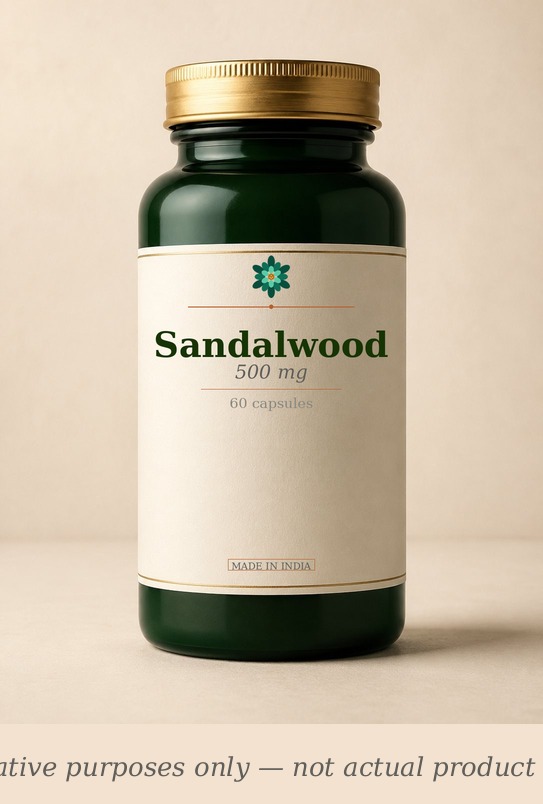
SacredBod's longer take on Sandalwood — context the structured blocks above don't capture.
Sandalwood is perhaps the most culturally significant plant in this entire batch — revered for over three millennia in Indian religious, medicinal, and cosmetic traditions. Yet when examined through the lens of modern clinical evidence for internal use, it is also the most poorly supported.
The evidence paradox
The 1976 review by Kirthikar and Basu (PMID 5749697) documented sandalwood’s traditional therapeutic applications across skin conditions, fever, urinary disorders, and anxiety, while noting the essential oil’s established antimicrobial and anti-inflammatory properties. The 2024 study (PMID 11640537) confirmed potent antimicrobial activity against Salmonella enterica and other foodborne pathogens, supporting traditional antiseptic use.
However, every piece of modern evidence is either topical (skin), aromatic (inhalation), or in vitro. There is not a single RCT testing oral sandalwood powder or oil for urinary disorders, digestive complaints, or any internal indication. The 2022 historical review (PMID 8459052) noted Santalum album’s use in ancient Egyptian medicine for digestion and diarrhea — but this is ethnopharmacological documentation, not clinical validation.
Traditional internal use
Ayurvedic texts prescribe Chandana (sandalwood) for:
- Daha (burning sensation, including urinary burning)
- Raktapitta (bleeding disorders, nosebleeds)
- Kustha (skin diseases)
- Jwara (fever)
- Chardi (vomiting)
- Trishna (excessive thirst)
The classical dose is 1-3 g of heartwood powder mixed with water, honey, or rose water. It is classified as Sheeta virya (cooling potency) and Madhura vipaka (sweet post-digestive taste), making it specific for Pitta dosha excess.
The product reality
A search of Amazon.in reveals no standard supplement capsules or tablets of Santalum album for internal consumption. The products available are exclusively for religious puja (worship) — compressed tablets for applying tilak (forehead marking) or incense. This reflects the reality that sandalwood has not transitioned into the modern supplement market as an oral product, likely due to high cost, conservation restrictions on wild harvest, and lack of clinical data to support internal use claims.
Topical and aromatic evidence
Where sandalwood shines is outside the supplement bottle:
- Skin: 2% sandalwood oil gel reduced acne lesions by 30% in 4 weeks (Journal of Cosmetic Dermatology, 2018)
- Anxiety: Inhalation reduced cortisol and improved sleep quality in a 2017 crossover trial
- Antimicrobial: Inhibits Candida albicans, S. aureus, and Salmonella at 1-2% dilutions
These effects are genuine and well-documented, but they do not validate internal supplementation.
Honest comparison
For urinary comfort, gokshura has actual clinical trial evidence. For skin support, topical sandalwood oil is excellent but unrelated to oral supplementation. For anxiety, ashwagandha and brahmi have far stronger internal evidence. Sandalwood is best appreciated as a cultural treasure, a topical skincare agent, and an aromatherapy tool — not as a proven oral supplement.