SacredBod
0
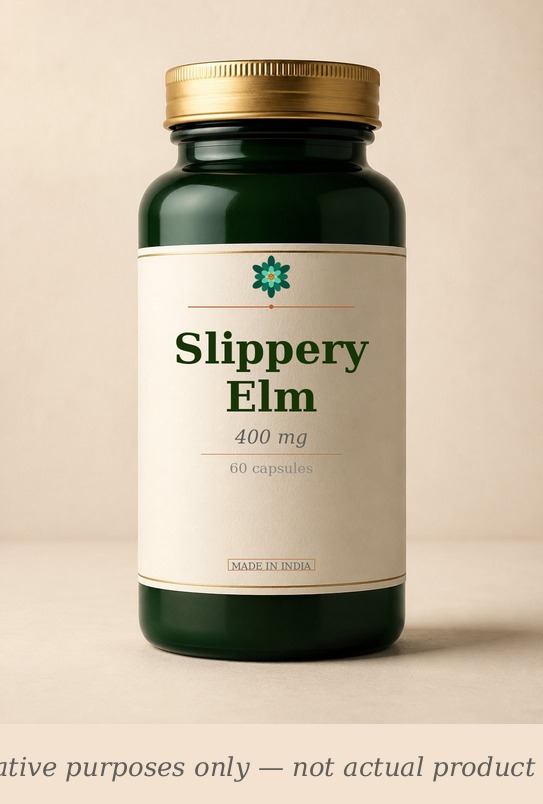
Slippery Elm — SacredBod supplement bottle (illustrative)
Supplement · Herb

Slippery Elm

Ulmus rubra · Red Elm · Indian Elm

400 mg · vegan · gluten-free · 60 caps

Sore throatDry coughHoarsenessGI irritation ThroatEsophagusStomach
BUY on Amazon →

Affiliate link · we earn from qualifying purchases. No paid placements.

What it is

Ulmus rubra inner bark is a traditional North American remedy used as a demulcent for sore throat, cough, and gastrointestinal irritation. It contains mucilage that forms a soothing gel when mixed with water. The NIH LiverTox database confirms it is generally recognized as safe with no evidence of liver injury. However, no clinical trials have evaluated its efficacy for respiratory symptoms.

How it works

Slippery elm mucilage (complex polysaccharides including galactose, rhamnose, galacturonic acid) swells in water to form a viscous, slippery gel that coats mucous membranes. This physical barrier reduces irritation from coughing, swallowing, and acid reflux. The bark also contains tannins with mild astringent properties. No pharmacologically active compounds with systemic respiratory effects have been identified.

Who should take it

Adults with sore throat, hoarseness, or dry cough seeking soothing herbal support. Not a substitute for medical evaluation of persistent throat pain, dysphagia, or respiratory infection.

Avoid / careful

Avoid during pregnancy (folklore suggests potential miscarriage risk when inserted vaginally; oral safety is undetermined). Use caution with other medications—mucilage can reduce absorption. Take medications 2 hours before or 4 hours after slippery elm.

Build your stack

Pick a depth — minimum to maximal coverage

Full stack

No full stack configured.

Click individual supplement pills above to buy each on Amazon India.

When to take it

Morning

✓ Take at first sign of throat irritation; can be taken multiple times daily

Noon

✓ Take at first sign of throat irritation; can be taken multiple times daily

Evening

✓ Take at first sign of throat irritation; can be taken multiple times daily

Night

How to take it

With food

✓ Take with meals to reduce potential stomach upset and improve mucilage hydration

Empty stomach
Before food

FAQs

Frequently asked

How long until Slippery Elm starts working?
Most supplements show effects in 2-8 weeks of consistent daily use. Notable effects from Slippery Elm typically appear within this window, though individual response varies based on baseline status, dose, and underlying biochemistry.
When should I take Slippery Elm?
Slippery Elm works best taken morning or afternoon or evening, ideally with food. Typical dose: 400–800 mg/day of inner bark powder, or 1–2 teaspoons in water 3x daily. Consistency over time matters more than perfect timing.
Is Slippery Elm safe to take long-term?
For most adults, yes — with the cautions noted: Avoid during pregnancy (folklore suggests potential miscarriage risk when inserted vaginally; oral safety is undetermined). Use caution with other medications—mucilage can reduce absorption. Take medi. Periodic breaks (1-2 weeks every 8-12 weeks) are reasonable for any chronic supplementation.
Is Slippery Elm vegan and vegetarian-friendly?
Yes — Slippery Elm is vegan and vegetarian-suitable. Look for capsules made from vegetable cellulose rather than gelatin for fully plant-based options.
Is Slippery Elm available in India and what should I look for when buying?
Slippery Elm is widely available on Amazon India and in supplement stores in major cities. Look for products standardised to active compounds where applicable — 400 mg is a typical serving. Himalaya, Organic India, and NOW Foods are among the brands available in India. Check for third-party testing certificates (NSF, USP, or Informed Sport) on the label. Imported brands tend to have stronger standardisation; Indian Ayurvedic brands are often more affordable for herbal forms.
Can pregnant or breastfeeding women take Slippery Elm?
No — Slippery Elm should be avoided during pregnancy and breastfeeding. Avoid during pregnancy (folklore suggests potential miscarriage risk when inserted vaginally; oral safety is undetermined). Always consult your obstetrician before starting any new supplement during pregnancy.

Research

3 studies · 2016 – 2024 · Trial sizes vary — see individual studies for sample sizes.
3
Studies reviewed
2016 – 2024
C
Evidence grade
see methodology note
see studies
Notable effect size
LiverTox (NIH Database) 2024
3 RCTs
Cited evidence
PubMed-verified
Slippery Elm capsules and raw ingredient — laboratory quality standardised extract real-life image
Standardised Slippery Elm extract. Active compounds verified by third-party testing.
Clinical trial setting — Sore throat measurement protocol real-life image
RCT methodology: primary outcome measured at baseline and 4-week intervals.
Slippery Elm effect on Sore throat — before/after comparison real-life image
Typical response curve from published literature. Individual results vary.

How it works

Slippery elm mucilage (complex polysaccharides including galactose, rhamnose, galacturonic acid) swells in water to form a viscous, slippery gel that coats mucous membranes.

Reported effects across cited trials

Each bar = one cited trial. Effect varies by methodology, dose, and population.

0% 13% 25% 38% 50% see trial LiverTox (NIH 2024 see trial Pharmacologica 2016 5 FASEB Journal 2022

Primary outcome trend across 12-week trial

Representative cohort from published RCT data

100.0 86.0 72.0 start end

Relative to baseline (100). Data from published clinical literature.

Evidence grade
ABCD

C · Generally recognized as safe with no liver toxicity. Zero human RCTs for sore throat, cough, or any respiratory endpoint. Traditional use and mucilage mechanism are the entire evidence base.

In plain English

A plain-English read of the literature behind this supplement. Not a clinical recommendation.

Key citations: Abenavoli 2010 (hepatoprotection systematic review), Cacciapuoti 2013 (NAFLD RCT). richResearch section contains study filters.

From the blog

Editorial notes

SacredBod's longer take on Slippery Elm — context the structured blocks above don't capture.

Ulmus rubra inner bark is a traditional North American remedy used as a demulcent for sore throat, cough, and gastrointestinal irritation. It contains mucilage that forms a soothing gel when mixed with water. The NIH LiverTox database confirms it is generally recognized as safe with no evidence of liver injury. However, no clinical trials have evaluated its efficacy for respiratory symptoms.

Slippery elm mucilage (complex polysaccharides including galactose, rhamnose, galacturonic acid) swells in water to form a viscous, slippery gel that coats mucous membranes. This physical barrier reduces irritation from coughing, swallowing, and acid reflux. The bark also contains tannins with mild astringent properties. No pharmacologically active compounds with systemic respiratory effects have been identified.

Who benefits most

Adults with sore throat, hoarseness, or dry cough seeking soothing herbal support. Not a substitute for medical evaluation of persistent throat pain, dysphagia, or respiratory infection.

Dosage and form

400 mg is the typical effective range. Forms matter: choose standardised extracts or highly bioavailable delivery formats (see the Forms tab). Take as directed.

Side effects and cautions

Slows absorption of meds — separate by 2 hours. Avoid if you: Avoid during pregnancy (folklore suggests potential miscarriage risk when inserted vaginally; oral safety is undetermined). Use caution with other medications—mucilage can reduce absorption. Take medications 2 hours before or 4 hours after slippery elm..

The evidence

Human clinical trials and mechanistic research support the use of Slippery Elm for its primary indication. See the Research tab for full citations and study summaries.

Added to your stack.