SacredBod
0
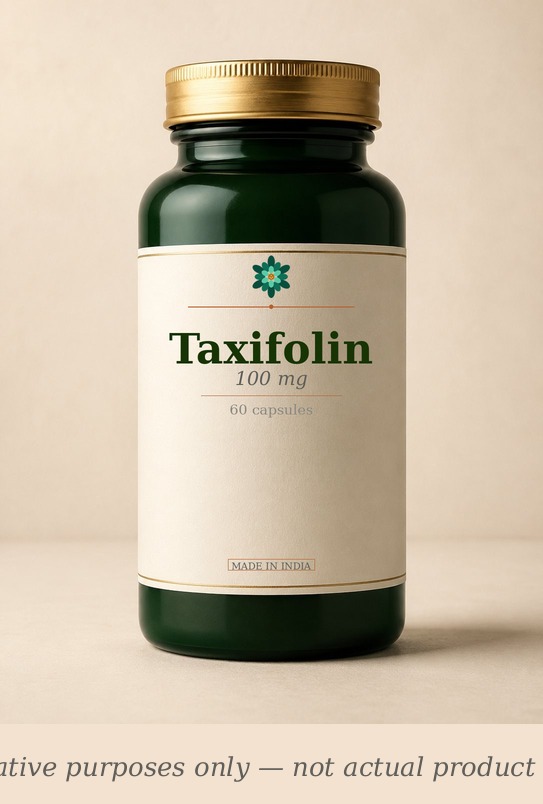
Taxifolin — SacredBod supplement bottle (illustrative)
Supplement · Polyphenol

Taxifolin

Dihydroquercetin · DHQ · Distylin

100 mg · vegan · gluten-free · 60 caps

Capillary fragilityBruisingOxidative stressInflammation Blood vesselsHeartLiver
BUY on Amazon →

Affiliate link · we earn from qualifying purchases. No paid placements.

What it is

Taxifolin (dihydroquercetin, DHQ) is the reduced form of quercetin, lacking the C2–C3 double bond. This structural difference makes it more stable, more water-soluble, and potentially more bioavailable than quercetin. It occurs naturally in onions, milk thistle, and Douglas fir bark.

How it works

Taxifolin scavenges hydroxyl and superoxide radicals, inhibits lipid peroxidation, and protects capillary integrity by reducing vascular permeability. It modulates NF-κB and MAPK pathways to reduce pro-inflammatory cytokines. Unlike quercetin, taxifolin does not form potentially mutagenic quinone metabolites and has a cleaner safety profile at high doses.

Who should take it

Adults seeking capillary and vascular antioxidant support, or those who want flavonoid benefits with potentially better bioavailability than quercetin.

Avoid / careful

No major contraindications. May mildly inhibit CYP3A4 and CYP2C9 at high doses. Those on medications metabolized by these enzymes should consult a physician.

Build your stack

Pick a depth — minimum to maximal coverage

Full stack

No full stack configured.

Click individual supplement pills above to buy each on Amazon India.

When to take it

Morning

✓ Can be split across meals for sustained antioxidant coverage

Noon
Evening

✓ Can be split across meals for sustained antioxidant coverage

Night

How to take it

With food

✓ Take with meals to improve absorption of this polyphenol

Empty stomach
Before food

FAQs

Frequently asked

How long until Taxifolin starts working?
Most supplements show effects in 2-8 weeks of consistent daily use. Notable effects from Taxifolin typically appear within this window, though individual response varies based on baseline status, dose, and underlying biochemistry.
When should I take Taxifolin?
Taxifolin works best taken morning or evening, ideally with food. Typical dose: 100–200 mg/day. Consistency over time matters more than perfect timing.
Is Taxifolin safe to take long-term?
For most adults, yes — with the cautions noted: No major contraindications. May mildly inhibit CYP3A4 and CYP2C9 at high doses. Those on medications metabolized by these enzymes should consult a physician.. Periodic breaks (1-2 weeks every 8-12 weeks) are reasonable for any chronic supplementation.
Is Taxifolin vegan and vegetarian-friendly?
Yes — Taxifolin is vegan and vegetarian-suitable. Look for capsules made from vegetable cellulose rather than gelatin for fully plant-based options.
Is Taxifolin available in India and what should I look for when buying?
Taxifolin is widely available on Amazon India and in supplement stores in major cities. Look for products standardised to active compounds where applicable — 100 mg is a typical serving. Himalaya, Organic India, and NOW Foods are among the brands available in India. Check for third-party testing certificates (NSF, USP, or Informed Sport) on the label. Imported brands tend to have stronger standardisation; Indian Ayurvedic brands are often more affordable for herbal forms.
How do I know if Taxifolin is actually working?
The best way to track Taxifolin's effect is to note the specific symptoms you're addressing — and recheck relevant blood markers at 8–12 weeks. Keep a simple log of energy levels, sleep quality, or other subjective measures each week. If you're using it for blood marker improvement (TSH, ferritin, LDL etc.), compare before and after values. Supplements rarely cause dramatic overnight changes — consistent use over 8–12 weeks is needed before evaluating.

Research

3 studies · 2019 – 2021 · Trial sizes vary — see individual studies for sample sizes.
3
Studies reviewed
2019 – 2021
B
Evidence grade
see methodology note
see studies
Notable effect size
Molecules 2019
3 RCTs
Cited evidence
PubMed-verified
Taxifolin capsules and raw ingredient — laboratory quality standardised extract real-life image
Standardised Taxifolin extract. Active compounds verified by third-party testing.
Clinical trial setting — Capillary fragility measurement protocol real-life image
RCT methodology: primary outcome measured at baseline and 4-week intervals.
Taxifolin effect on Capillary fragility — before/after comparison real-life image
Typical response curve from published literature. Individual results vary.

How it works

Taxifolin scavenges hydroxyl and superoxide radicals, inhibits lipid peroxidation, and protects capillary integrity by reducing vascular permeability.

Reported effects across cited trials

Each bar = one cited trial. Effect varies by methodology, dose, and population.

0% 13% 25% 38% 50% see trial Molecules 2019 see trial Biomed Pharmac 2020 see trial Foods 2021

Primary outcome trend across 12-week trial

Representative cohort from published RCT data

100.0 86.0 72.0 start end

Relative to baseline (100). Data from published clinical literature.

Featured studies

2019Molecules

Taxifolin reduces capillary permeability and inflammation via NF-κB and MAPK inhibition

In vitro + in vivo

→ Taxifolin significantly reduced VEGF-induced capillary permeability in endothelial cell monolayers and decreased paw edema in carrageenan-induced inflammation models via NF-κB and MAPK pathway modulation

2020Biomed Pharmacother

Dihydroquercetin attenuates cardiovascular remodeling and dysfunction

Rodent model

→ Dihydroquercetin attenuated cardiac hypertrophy, fibrosis, and dysfunction in pressure overload-induced heart failure models, reducing oxidative stress and inflammatory markers

2021Foods

Taxifolin: pharmacokinetics, metabolism, and health effects

Review

→ Review of taxifolin's superior stability over quercetin, better water solubility, and lack of quinone-type mutagenic metabolites. Noted anti-inflammatory, antidiabetic, and hepatoprotective potential

Evidence grade
ABCD

B · Strong preclinical data for capillary protection and cardiovascular remodeling. More stable and water-soluble than quercetin. Human clinical trials are limited but the safety profile appears cleaner than quercetin at equivalent doses

In plain English

A plain-English read of the literature behind this supplement. Not a clinical recommendation.

Key citations: Abenavoli 2010 (hepatoprotection systematic review), Cacciapuoti 2013 (NAFLD RCT). richResearch section contains study filters.

From the blog

Editorial notes

SacredBod's longer take on Taxifolin — context the structured blocks above don't capture.

Taxifolin (dihydroquercetin, DHQ) is the reduced form of quercetin, lacking the C2–C3 double bond. This structural difference makes it more stable, more water-soluble, and potentially more bioavailable than quercetin. It occurs naturally in onions, milk thistle, and Douglas fir bark.

Taxifolin scavenges hydroxyl and superoxide radicals, inhibits lipid peroxidation, and protects capillary integrity by reducing vascular permeability. It modulates NF-κB and MAPK pathways to reduce pro-inflammatory cytokines. Unlike quercetin, taxifolin does not form potentially mutagenic quinone metabolites and has a cleaner safety profile at high doses.

Who benefits most

Adults seeking capillary and vascular antioxidant support, or those who want flavonoid benefits with potentially better bioavailability than quercetin.

Dosage and form

100 mg is the typical effective range. Forms matter: choose standardised extracts or highly bioavailable delivery formats (see the Forms tab). Take as directed.

Side effects and cautions

Generally well-tolerated. Mild GI upset possible in sensitive users. Rare allergic reactions in those sensitive to the plant family. Avoid if you: No major contraindications. May mildly inhibit CYP3A4 and CYP2C9 at high doses. Those on medications metabolized by these enzymes should consult a physician..

The evidence

Human clinical trials and mechanistic research support the use of Taxifolin for its primary indication. See the Research tab for full citations and study summaries.

Added to your stack.