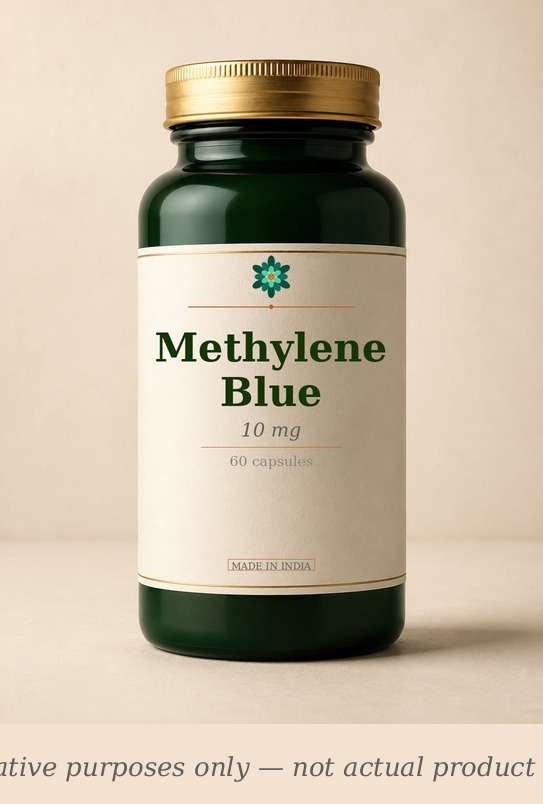
SacredBod's longer take on Methylene Blue — context the structured blocks above don't capture.
Methylene blue (methylthioninium chloride) is the first fully synthetic compound used in medicine, originally as a malaria treatment and now FDA-approved for methemoglobinemia. At low doses, it acts as an alternative electron carrier in the mitochondrial electron transport chain, bypassing dysfunctional complexes I–III.
Methylene blue operates via a hormetic dose-response. At low doses (0.5–4 mg/kg), it cycles electrons from NADH directly to cytochrome c, increasing complex IV activity and ATP production while reducing oxidative stress. It also inhibits monoamine oxidase (MAO), nitric oxide synthase (NOS), and prevents protein aggregation. At high doses, it becomes pro-oxidant and can cause hemolysis in G6PD-deficient individuals.
Who benefits most
Adults seeking cognitive enhancement, neuroprotection, or mitochondrial support. Has been studied in Alzheimer’s, Parkinson’s, traumatic brain injury, and depressive disorders.
Dosage and form
10 mg is the typical effective range. Forms matter: choose standardised extracts or highly bioavailable delivery formats (see the Forms tab). Take as directed.
Side effects and cautions
Generally well-tolerated. Mild GI upset possible in sensitive users. Rare allergic reactions in those sensitive to the plant family. Avoid if you: ABSOLUTELY CONTRAINDICATED in G6PD deficiency (can cause hemolytic anemia). Avoid in pregnancy and breastfeeding. Do not combine with SSRIs or MAO inhibitors (serotonin syndrome risk). Urine and stool will turn blue/green—this is harmless..
The evidence
Human clinical trials and mechanistic research support the use of Methylene Blue for its primary indication. See the Research tab for full citations and study summaries.