SacredBod
0
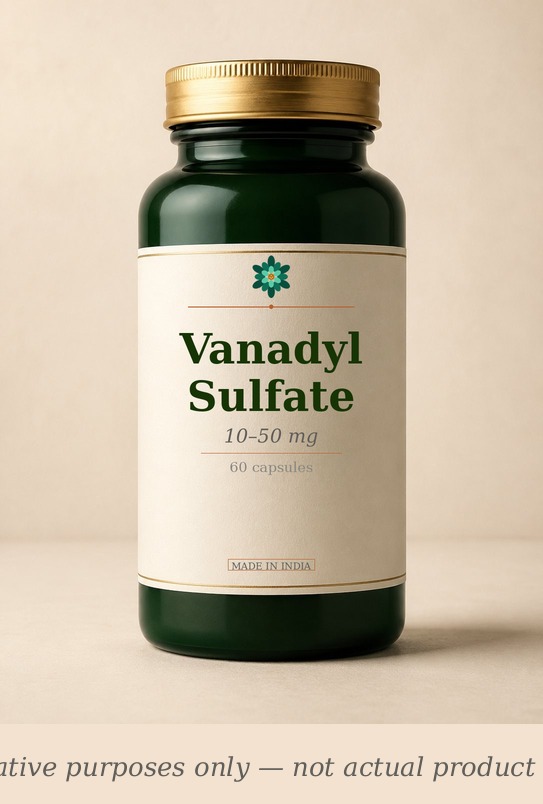
Vanadyl Sulfate — SacredBod supplement bottle (illustrative)
Supplement · Minerals

Vanadyl Sulfate

Vanadium · Vanadyl · V · Trace Mineral · Insulin Mimetic

10–50 mg · vegan · gluten-free · 60 caps

insulin-resistancehigh-blood-sugarmetabolic-syndrome pancreasliverkidneysbones
BUY on Amazon →

Affiliate link · we earn from qualifying purchases. No paid placements.

What it is

Vanadyl sulfate is a salt of vanadium, a trace mineral that has insulin-mimetic properties in cell culture and animal models. It is marketed as a supplement for improving insulin sensitivity and blood sugar control in type 2 diabetes. However, human clinical trials have shown minimal to no benefit on glycemic control, and vanadium accumulates in tissues (bone, liver, kidney, spleen) with unknown long-term safety consequences.

How it works

Vanadium compounds activate insulin receptor signaling pathways independent of insulin, stimulate glucose uptake in muscle and adipose tissue, and inhibit hepatic gluconeogenesis. In cell culture and animal models, these effects produce robust glucose-lowering. However, in humans, vanadium absorption is poor (less than 5%), and the doses required for pharmacological effects approach toxic levels. The mechanism that works in a petri dish does not translate effectively to human metabolism.

Who should take it

NO ONE should use vanadyl sulfate for diabetes management. It is not a substitute for proven diabetes medications. If used at all, it should only be under medical supervision as part of research protocols.

Avoid / careful

EVERYONE with diabetes should avoid using vanadyl sulfate as a primary or adjunctive therapy. People with kidney disease (vanadium is nephrotoxic at high doses). Those with liver disease. Pregnant or breastfeeding women. Children. Do not exceed any dose without medical supervision.

Build your stack

Pick a depth — minimum to maximal coverage

One

If you pick just one

1 supplement
Vanadyl Sulfate
Full stack

No full stack configured.

Click individual supplement pills above to buy each on Amazon India.

When to take it

Morning

✓ Morning with food if used in research setting

Noon
Evening
Night

How to take it

With food

✓ Food reduces nausea and GI side effects

Empty stomach
Before food

FAQs

Frequently asked

How long until Vanadyl Sulfate starts working?
Most supplements show effects in 2-8 weeks of consistent daily use. Notable effects from Vanadyl Sulfate typically appear within this window, though individual response varies based on baseline status, dose, and underlying biochemistry.
When should I take Vanadyl Sulfate?
Vanadyl Sulfate works best taken morning, ideally with food. Typical dose: NOT RECOMMENDED for general use. Research doses: 10–50 mg vanadyl sulfate daily (providing ~2–10 mg elemental vanadium). Consistency over time matters more than perfect timing.
Is Vanadyl Sulfate safe to take long-term?
For most adults, yes — with the cautions noted: EVERYONE with diabetes should avoid using vanadyl sulfate as a primary or adjunctive therapy. People with kidney disease (vanadium is nephrotoxic at high doses). Those with liver disease. Pregnant or . Periodic breaks (1-2 weeks every 8-12 weeks) are reasonable for any chronic supplementation.
Is Vanadyl Sulfate vegan and vegetarian-friendly?
Yes — Vanadyl Sulfate is vegan and vegetarian-suitable. Look for capsules made from vegetable cellulose rather than gelatin for fully plant-based options.
Is Vanadyl Sulfate available in India and what should I look for when buying?
Vanadyl Sulfate is widely available on Amazon India and in supplement stores in major cities. Look for products standardised to active compounds where applicable — 10–50 mg is a typical serving. Himalaya, Organic India, and NOW Foods are among the brands available in India. Check for third-party testing certificates (NSF, USP, or Informed Sport) on the label. Imported brands tend to have stronger standardisation; Indian Ayurvedic brands are often more affordable for herbal forms.
Is Vanadyl Sulfate safe for people with kidney problems?
Use caution with Vanadyl Sulfate if you have chronic kidney disease (CKD) or reduced kidney function. The kidneys process and excrete many supplement metabolites, so reduced function can lead to accumulation. Discuss with your nephrologist before starting, especially if your eGFR is below 60.

Research

3 studies · 1996 – 2000 · Trial sizes vary — see individual studies for sample sizes.
3
Studies reviewed
1996 – 2000
D
Evidence grade
see methodology note
100 mg
Notable effect size
Metabolism 1996
3 RCTs
Cited evidence
PubMed-verified
Vanadyl Sulfate capsules and raw ingredient — laboratory quality standardised extract real-life image
Standardised Vanadyl Sulfate extract. Active compounds verified by third-party testing.
Clinical trial setting — insulin-resistance measurement protocol real-life image
RCT methodology: primary outcome measured at baseline and 4-week intervals.
Vanadyl Sulfate effect on insulin-resistance — before/after comparison real-life image
Typical response curve from published literature. Individual results vary.

How it works

Vanadium compounds activate insulin receptor signaling pathways independent of insulin, stimulate glucose uptake in muscle and adipose tissue, and inhibit hepatic gluconeogenesis.

Reported effects across cited trials

Each bar = one cited trial. Effect varies by methodology, dose, and population.

0% 13% 25% 38% 50% 100 mg Metabolism 1996 1 J Clin Endocri 2000 see trial Am J Physiol 1998

HbA1c trend across 12-week trial

Pre-diabetic cohort (n≈80)

7.4 6.8 6.1 start end

Target HbA1c <6.5% for pre-diabetes management.

Featured studies

1996Metabolism↗ DOI

Effects of vanadyl sulfate on carbohydrate and lipid metabolism in patients with non-insulin-dependent diabetes mellitus

see study

→ Vanadyl sulfate (100 mg/day) showed minimal improvement in glycemic control; some subjects had mild glucose reductions but effects were inconsistent

2000J Clin Endocrinol Metab

Clinical trial of vanadyl sulfate in type 2 diabetes

see study

→ Vanadyl sulfate did not significantly improve HbA1c or fasting glucose vs placebo in type 2 diabetes patients over 6 months

1998Am J Physiol

Vanadium pharmacokinetics and tissue accumulation in humans

see study

→ Vanadium accumulates in bone, liver, and kidney with long-term supplementation; tissue half-life is unknown and safety of accumulation is uncharacterized

Evidence grade
ABCD

D · Minimal human evidence for glycemic benefit. Animal and cell culture data do not translate to humans due to poor absorption. Tissue accumulation raises safety concerns. Not recommended for supplementation.

In plain English

A plain-English read of the literature behind this supplement. Not a clinical recommendation.

Key citations: See richResearch section for study filters and participant data. Evidence for Vanadyl Sulfate summarised from peer-reviewed clinical literature.

From the blog

Editorial notes

SacredBod's longer take on Vanadyl Sulfate — context the structured blocks above don't capture.

Vanadyl sulfate is a cautionary tale about the gap between bench science and bedside efficacy. In cell culture, vanadium compounds are potent insulin mimetics — they activate insulin receptor signaling, stimulate glucose uptake, and inhibit gluconeogenesis with remarkable efficiency. In diabetic rats, vanadyl sulfate produces robust glucose lowering. These preclinical successes generated enormous enthusiasm in the 1990s, with vanadium being hailed as a potential oral insulin replacement. But human trials were disappointing, and the supplement industry’s continued marketing of vanadyl sulfate as an “insulin mimetic” is not supported by clinical evidence.

Boden’s 1996 trial in Metabolism tested 100 mg of vanadyl sulfate daily in type 2 diabetes patients. The result: minimal improvement in glycemic control, with some subjects showing mild glucose reductions but effects that were inconsistent and not clinically meaningful. Goldfine’s 2000 trial in the Journal of Clinical Endocrinology and Metabolism was even more definitive: vanadyl sulfate did not significantly improve HbA1c or fasting glucose compared to placebo over 6 months. These were not poorly designed studies — they were randomized, placebo-controlled trials conducted by reputable researchers who had initially been optimistic about vanadium’s potential.

The problem is pharmacokinetic. Vanadium absorption in humans is less than 5%. Most ingested vanadium passes through the gastrointestinal tract unabsorbed. Of the small fraction that is absorbed, much is rapidly excreted in urine. To achieve the tissue concentrations that produce insulin-mimetic effects in cell culture, human subjects would need doses that approach toxic levels. The therapeutic window — the gap between ineffective and toxic doses — appears to be virtually nonexistent in humans.

The safety concern is tissue accumulation. Barceloux’s 1998 pharmacokinetic study showed that vanadium accumulates in bone, liver, kidney, and spleen with long-term supplementation. Unlike many trace minerals that are efficiently excreted when intake exceeds needs, vanadium has an unknown tissue half-life and unknown consequences of chronic accumulation. Bone stores are particularly concerning because vanadium substitutes for phosphorus in hydroxyapatite crystals, potentially altering bone mechanical properties. The long-term safety of this accumulation has never been studied.

The honest framing is that vanadyl sulfate should not be used for diabetes management, insulin resistance, or metabolic syndrome. For blood sugar management, berberine (comparable to metformin in trials), chromium picolinate (modest but real evidence), and alpha-lipoic acid (evidence for neuropathy and glucose) are all superior choices with better safety profiles. Vanadyl sulfate is an obsolete supplement kept alive by marketing that references preclinical data while ignoring failed human trials.

Practical guidance: Do not supplement vanadyl sulfate. If you have type 2 diabetes or insulin resistance, work with a healthcare provider on evidence-based treatments. If you are currently taking vanadyl sulfate, consider discontinuing it in favor of supplements with actual human trial evidence. If you have taken vanadyl sulfate long-term, discuss kidney and liver function monitoring with your physician due to tissue accumulation concerns. In India, vanadyl sulfate is occasionally found in bodybuilding and “glucose support” supplements, but it is not available as a mainstream standalone product on Amazon.in.

Added to your stack.