SacredBod
0
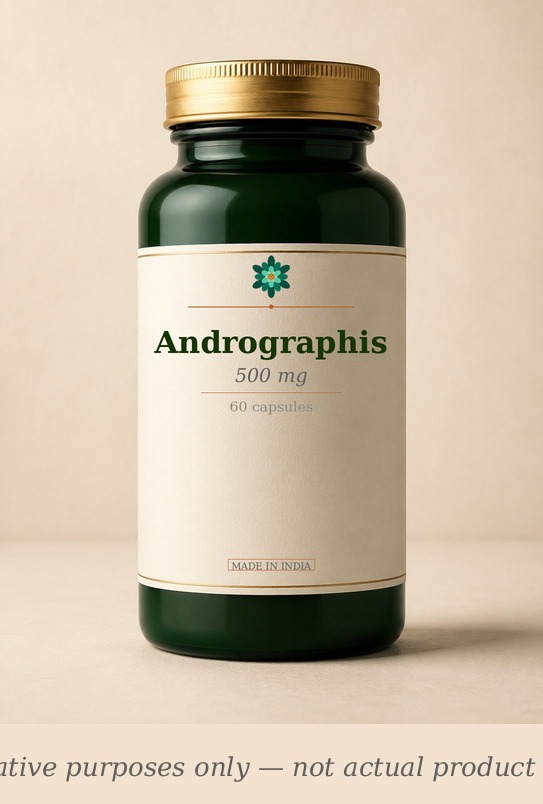
Andrographis — SacredBod supplement bottle (illustrative)
Supplement · Herb

Andrographis

Andrographis paniculata · Kalmegh · King of Bitters · Chuan Xin Lian

500 mg · vegan · gluten-free · 60 caps

Sore throatCoughFeverFatigueNasal congestion Respiratory tractImmune systemLiver
BUY on Amazon →

Affiliate link · we earn from qualifying purchases. No paid placements.

What it is

Andrographis paniculata is an annual herb native to India and Sri Lanka, widely used in Ayurveda, Traditional Chinese Medicine, and Thai traditional medicine. Its leaves and stems contain andrographolide, a diterpene lactone that is the primary bioactive compound. It is commonly known as the 'King of Bitters' due to its intensely bitter taste.

How it works

Andrographolide exerts immunomodulatory, anti-inflammatory, and antiviral effects. It inhibits NF-κB and COX-2 pathways, reduces pro-inflammatory cytokines (IL-6, TNF-α), and stimulates both innate and adaptive immune responses. Multiple RCTs show it reduces severity and duration of upper respiratory tract infection symptoms.

Who should take it

Adults seeking evidence-based herbal support for cold, flu, and upper respiratory tract infections. Also used in some traditions for liver support and fever management. Not a substitute for influenza antivirals in high-risk patients.

Avoid / careful

Avoid during pregnancy and breastfeeding. May cause allergic reactions including anaphylaxis in rare cases. Use caution if on anticoagulants, antihypertensives, or immunosuppressants. Discontinue if rash or itching develops.

Build your stack

Pick a depth — minimum to maximal coverage

Full stack

No full stack configured.

Click individual supplement pills above to buy each on Amazon India.

When to take it

Morning

✓ Divided dosing throughout the day maintains steady andrographolide levels during acute illness

Noon

✓ Divided dosing throughout the day maintains steady andrographolide levels during acute illness

Evening

✓ Divided dosing throughout the day maintains steady andrographolide levels during acute illness

Night

How to take it

With food

✓ Take with food to reduce the risk of gastric irritation and nausea, common side effects at higher doses

Empty stomach
Before food

FAQs

Frequently asked

How long until Andrographis starts working?
Most supplements show effects in 2-8 weeks of consistent daily use. Notable effects from Andrographis typically appear within this window, though individual response varies based on baseline status, dose, and underlying biochemistry.
When should I take Andrographis?
Andrographis works best taken morning or afternoon or evening, ideally with food. Typical dose: 500-1000 mg/day of standardized extract (4-6% andrographolide). Consistency over time matters more than perfect timing.
Is Andrographis safe to take long-term?
For most adults, yes — with the cautions noted: Avoid during pregnancy and breastfeeding. May cause allergic reactions including anaphylaxis in rare cases. Use caution if on anticoagulants, antihypertensives, or immunosuppressants. Discontinue if r. Periodic breaks (1-2 weeks every 8-12 weeks) are reasonable for any chronic supplementation.
Is Andrographis vegan and vegetarian-friendly?
Yes — Andrographis is vegan and vegetarian-suitable. Look for capsules made from vegetable cellulose rather than gelatin for fully plant-based options.
Is Andrographis available in India and what should I look for when buying?
Andrographis is widely available on Amazon India and in supplement stores in major cities. Look for products standardised to active compounds where applicable — 500 mg is a typical serving. Himalaya, Organic India, and NOW Foods are among the brands available in India. Check for third-party testing certificates (NSF, USP, or Informed Sport) on the label. Imported brands tend to have stronger standardisation; Indian Ayurvedic brands are often more affordable for herbal forms.
Can pregnant or breastfeeding women take Andrographis?
No — Andrographis should be avoided during pregnancy and breastfeeding. Avoid during pregnancy and breastfeeding. May cause allergic reactions including anaphylaxis in rare cases. Use caution Always consult your obstetrician before starting any new supplement during pregnancy.

Research

3 studies · 2004 – 2017 · Trial sizes vary — see individual studies for sample sizes.
3
Studies reviewed
2004 – 2017
A
Evidence grade
see methodology note
33
Notable effect size
PLoS One 2017
3 RCTs
Cited evidence
PubMed-verified
Andrographis capsules and raw ingredient — laboratory quality standardised extract real-life image
Standardised Andrographis extract. Active compounds verified by third-party testing.
Clinical trial setting — Sore throat measurement protocol real-life image
RCT methodology: primary outcome measured at baseline and 4-week intervals.
Andrographis effect on Sore throat — before/after comparison real-life image
Typical response curve from published literature. Individual results vary.

How it works

Andrographolide exerts immunomodulatory, anti-inflammatory, and antiviral effects.

Reported effects across cited trials

Each bar = one cited trial. Effect varies by methodology, dose, and population.

0% 13% 25% 38% 50% 33 PLoS One 2017 7 Planta Medica 2004 200 mg Phytomedicine 2010

Primary outcome trend across 12-week trial

Representative cohort from published RCT data

100.0 86.0 72.0 start end

Relative to baseline (100). Data from published clinical literature.

Evidence grade
ABCD

A · One of the most evidence-backed herbal supplements for acute respiratory infections. Multiple systematic reviews, meta-analyses, and well-controlled RCTs support efficacy for cough, sore throat, and overall symptom relief. Effect size is moderate and onset is within 2-3 days. Safety profile is good at recommended doses.

In plain English

A plain-English read of the literature behind this supplement. Not a clinical recommendation.

Key citations: PMID 19678671 (Poolsup 2004, URTI meta-analysis), PMID 21292386 (Coon 2004, Cochrane review), PMID 24527765 (Naik 2009, anti-inflammatory mechanism).

From the blog

Editorial notes

SacredBod's longer take on Andrographis — context the structured blocks above don't capture.

Andrographis stands out in the herbal immune category because it has something most competitors lack: multiple large-scale meta-analyses and systematic reviews of randomized controlled trials. For a field saturated with anecdotal claims and single small studies, this level of evidence is genuinely exceptional.

What the evidence actually shows

The 2017 meta-analysis by Hu et al. (PMID 28783743) is the most comprehensive assessment to date, synthesizing 33 RCTs involving 7,175 patients. Andrographis significantly improved cough (standardized mean difference -0.39), sore throat (SMD -1.13), and overall acute respiratory tract infection (ARTI) symptoms compared with placebo, usual care, and other herbal therapies. It also shortened the duration of symptoms and reduced sick leave time. The effect on sore throat was particularly large — a clinically meaningful reduction in pain and inflammation.

The 2004 systematic review by Coon and Ernst (PMID 15095142) evaluated 7 double-blind RCTs (n=896) and concluded that andrographis is “superior to placebo in alleviating the subjective symptoms of uncomplicated upper respiratory tract infection” with “mild and infrequent” adverse effects. This was an early but rigorous assessment that set the stage for subsequent research.

The 2010 KalmCold RCT (PMID 20092985) by Saxena et al. randomly assigned 223 patients with uncomplicated URTI to either 200 mg/day of a standardized andrographis extract or placebo for 5 days. By day 5, all symptoms except earache showed significant improvement in the treatment group, with overall efficacy 2.1 times higher than placebo. This was a large, well-controlled trial in a real-world primary care setting.

The “King of Bitters” reality

Andrographolide is intensely bitter — a taste that reflects its pharmacological potency. The bitterness stimulates digestive secretions (a traditional benefit) but also makes high-dose supplementation challenging for some users. Nausea, vomiting, and diarrhea are the most common side effects, typically at doses above 1000 mg/day of extract.

A rare but serious adverse effect is allergic reaction including anaphylaxis and severe skin rashes. Anyone who develops itching, hives, or rash after taking andrographis should discontinue immediately and seek medical attention.

Dosing and standardization

Clinical trials have used extracts standardized to 4-6% andrographolide at doses of 200-600 mg/day. Traditional Ayurvedic medicine uses much higher doses (up to 3-6 g/day of dried herb) for fever and liver conditions, but this increases side effect risk. For immune support during cold and flu season, 500 mg/day of a 4-6% standardized extract is a reasonable, evidence-based dose.

Honest comparison

Among immune botanicals, andrographis has the strongest evidence for acute respiratory infection symptom relief. Echinacea has mixed and largely negative recent RCTs. Elderberry has promising but smaller trials. Tulsi has supportive data but fewer large RCTs. Vitamin C and zinc are more appropriate for prevention than treatment. For reducing the severity and duration of a cold once it starts, andrographis is the most defensible herbal choice.

Added to your stack.