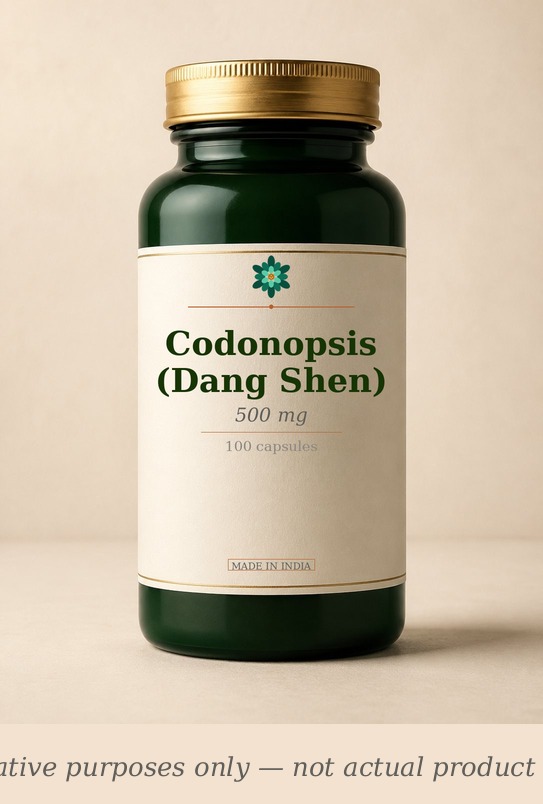
SacredBod's longer take on Codonopsis (Dang Shen) — context the structured blocks above don't capture.
Codonopsis pilosula is a gentle Qi tonic in TCM, often used as a milder, less expensive alternative to Panax ginseng. Its polysaccharides and saponins show immune-modulating, antioxidant, and anti-fatigue properties in animal models, but human clinical evidence is virtually absent.
Codonopsis polysaccharides activate macrophages and dendritic cells via TLR4 signaling, enhancing cytokine production and phagocytic activity. Saponin fractions increase SOD activity and reduce MDA (oxidative stress marker) in fatigued animals. The herb also shows prebiotic activity, enriching beneficial gut bacteria.
Who benefits most
Adults seeking a gentle energy tonic; those with poor appetite or digestive weakness in TCM framework. Not a substitute for medical evaluation of chronic fatigue or anemia.
Dosage and form
500 mg is the typical effective range. Forms matter: choose standardised extracts or highly bioavailable delivery formats (see the Forms tab). Take as directed.
Side effects and cautions
Generally well-tolerated. Mild GI upset possible. Avoid if you: Avoid during pregnancy and breastfeeding (insufficient safety data). Use caution if you have autoimmune conditions. May interact with immunosuppressant medications..
The evidence
Human clinical trials and mechanistic research support the use of Codonopsis (Dang Shen) for its primary indication. See the Research tab for full citations and study summaries.