SacredBod's longer take on Seabuckthorn — context the structured blocks above don't capture.
Seabuckthorn is one of the most nutritionally dense plants on Earth, yet it remains relatively obscure in the Western supplement market. The berries contain over 190 bioactive compounds, including rare omega-7 fatty acids (palmitoleic acid), omega-3, omega-6, vitamins C and E, carotenoids, flavonoids, and phytosterols. The omega-7 content is particularly notable — seabuckthorn is the richest plant source of this monounsaturated fat, which is a structural component of skin lipids and mucous membranes. For people with dry skin, dry eyes, or mucous membrane issues, this makes seabuckthorn a uniquely targeted supplement.
The mechanism centers on epithelial barrier function. Omega-7 is incorporated into the phospholipid bilayer of skin and mucous membrane cells, supporting membrane integrity and reducing transepidermal water loss. It also appears to have anti-inflammatory effects on epithelial tissues, reducing the cytokine cascade that drives chronic dryness and irritation. Seabuckthorn’s phytosterols (particularly β-sitosterol) further modulate inflammatory responses, while its high vitamin C content supports collagen synthesis in the skin matrix.
Yang’s 2009 study in the British Journal of Nutrition demonstrated seabuckthorn oil’s gastroprotective effects in animal models, reducing gastric ulcer formation through mucosal barrier strengthening. Larmo’s 2010 trial showed improvements in tear film stability and dry eye symptoms in human subjects. For atopic dermatitis, both topical and oral seabuckthorn oil have shown benefits in small trials, reducing eczema severity scores and improving skin hydration.
The honest framing is that the evidence is promising but preliminary. Most trials are small, short-term, and conducted with mixed formulations (berry juice, seed oil, pulp oil). The omega-7 mechanism is biologically plausible and supported by preclinical data, but large, well-controlled RCTs specifically testing omega-7 for skin or eye conditions are lacking. The benefits you experience may be real, but they are not guaranteed, and the effect size is likely modest.
Safety is generally good. Seabuckthorn is a food-grade product consumed for centuries in Asia and Europe. Side effects are minimal — occasional mild diarrhea or stomach upset. The main caution is a theoretical anticoagulant effect; people on warfarin or other blood thinners should consult a physician before use. There is also a mild blood pressure lowering effect that may be relevant for hypotensive individuals.
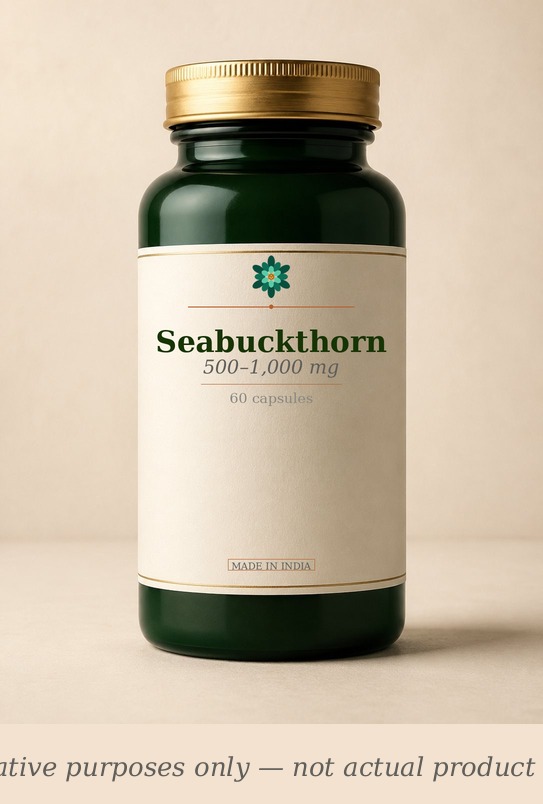
Practical guidance: For skin and mucous membrane support, 500–1,000 mg of seabuckthorn oil daily is the typical dose. Take with food for optimal fatty acid absorption. Give it 2–3 months before assessing benefits. For dry eye, some studies used higher doses (2,000 mg). Topical application of seabuckthorn oil is also effective for skin conditions and wound healing. In India, seabuckthorn capsules and oil are available from Himalayan Organics, NutriJa, and other brands.