SacredBod's longer take on Chlorella — context the structured blocks above don't capture.
Chlorella is the original green superfood — a single-celled algae that has been on the market since the 1960s, promising everything from immune enhancement to heavy metal detoxification to complete nutrition. The reality is a mix of genuine benefits and overstated marketing. Chlorella is indeed one of the most nutrient-dense organisms on Earth: 50-60% protein by dry weight, complete with all essential amino acids; rich in chlorophyll, lutein, beta-carotene, and iron; and containing unique polysaccharides that modulate immune function. But it is also the subject of some of the most exaggerated claims in the supplement industry, particularly around heavy metal detoxification and vitamin B12 content.
The immune effects are the best-supported benefit. A 2012 randomized, double-blind, placebo-controlled trial gave healthy adults 5 grams of chlorella daily for eight weeks. The results were robust: natural killer (NK) cell activity increased significantly, serum interferon-γ and interleukin-1β rose, and the increments were significantly greater than placebo. These are meaningful immunomodulatory effects — chlorella genuinely enhances innate immune surveillance. A 2003 study found that chlorella supplementation enhanced antibody response to influenza vaccination, though only in participants aged 50-55 years, not in the overall population. This suggests the immune benefit may be most relevant for middle-aged and older adults.
The heavy metal detoxification claim requires honest framing. Chlorella’s cell wall contains compounds that bind heavy metals in vitro — this is real. However, human clinical evidence that oral chlorella actually removes heavy metals from the body is extremely weak. A few small studies have shown modest reductions in mercury or lead in specific populations, but these are not definitive. For actual heavy metal toxicity, medical chelation therapy (DMSA, DMPS, EDTA) is the evidence-based standard of care. Chlorella should not be presented as a chelation agent. At best, it may provide modest binding support in the gut, reducing reabsorption of metals excreted in bile.
The B12 issue is critical and often ignored. Chlorella is frequently marketed to vegans as a B12 source, but the B12 in chlorella is largely corrinoid analogs — compounds that resemble B12 but are biologically inactive or even antagonistic to true B12 function. These pseudo-B12 analogs can compete with active B12 for absorption and cellular uptake, potentially worsening B12 status rather than improving it. Vegans taking chlorella for B12 should use cyanocobalamin or methylcobalamin supplements instead and not rely on algae-derived B12.
Safety is generally good but requires nuance. Chlorella is well-tolerated by most people. Common side effects are mild digestive upset, diarrhea, or green-colored stools (from chlorophyll). The iodine content is variable by species and growing conditions — people with thyroid conditions should monitor intake. Because chlorella is an algae grown in water, quality control matters: non-tested products may contain heavy metals (ironically, given the detox marketing), microcystins, or bacterial contamination. Choose brands with third-party testing for purity.
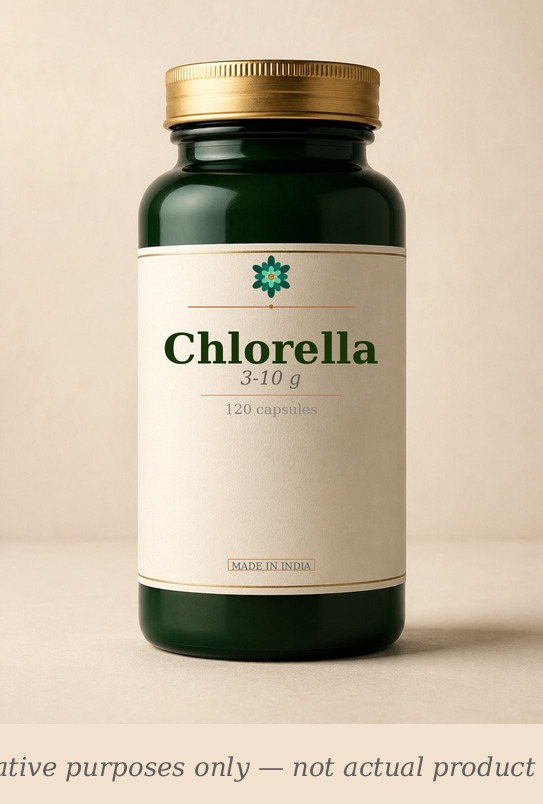
Practical guidance: Take 3-10 grams daily, divided into 2-3 doses with meals. Start at 1-2 grams and titrate up over 1-2 weeks to assess digestive tolerance. Broken-cell-wall forms improve nutrient bioavailability compared to intact cell wall products. For immune support, allow 4-8 weeks before assessing effects. Do not rely on chlorella for B12 — supplement with true B12 separately. If heavy metal exposure is a genuine concern, consult a physician about proper chelation therapy rather than relying on chlorella alone.
Quality control for chlorella is non-negotiable due to the risk of contamination. Because chlorella is grown in water, it can absorb heavy metals, pesticides, and industrial pollutants from its growing medium. Reputable manufacturers grow chlorella in controlled freshwater ponds and test every batch for heavy metals (lead, mercury, arsenic, cadmium), microcystins, and bacterial contamination. Look for products that provide these test results or have third-party certification. The cell wall processing method matters: ‘broken cell wall’ or ‘cracked cell wall’ chlorella has improved nutrient bioavailability compared to intact cell wall products, as humans cannot digest the tough cellulose cell wall. Some manufacturers use high-pressure processing to crack walls without heat degradation. In the Indian market, chlorella is often imported from Taiwan, Japan, or Korea; verify the country of origin and manufacturing standards. Avoid products with vague sourcing or no contamination testing, as the risks of heavy metal exposure outweigh potential benefits.
Chlorella’s position in the algae supplement market has shifted significantly over the past two decades. Early marketing emphasized it as a complete food source capable of sustaining human life — claims that were never substantiated and have been abandoned by reputable manufacturers. Modern positioning focuses on immune modulation, detoxification support, and nutrient density, which aligns better with the actual evidence. The cell wall debate has also evolved: early products sold intact cell wall chlorella, but research showing humans cannot digest this wall led to the development of broken-cell-wall processing. Some manufacturers now sell chlorella pyrenoidosa versus chlorella vulgaris as distinct products, though the evidence differences between species are minimal for most health outcomes. Consumers should focus on quality indicators — third-party testing, broken cell wall, clear species identification — rather than marketing distinctions between species. In India, chlorella is often marketed alongside spirulina in combination products; while both are beneficial, standalone products allow better dosing control and clearer attribution of effects.